Growth
During my Final Field Semester (Sep-Dec 2024), I had limited experience with formative assessment. Since I was only required to be at my placement two to three days per week, it was challenging to consistently monitor student learning. This limited presence led to gaps in my understanding of what students had grasped, making it more difficult to effectively address their learning needs.
Below is an example of a formative assessment I created to check student understanding of the following standard.
NGSS Standard:
- HS-LS2-6. Students will be able to evaluate claims, evidence, and reasoning that the complex interactions in ecosystems maintain relatively consistent numbers and types of organisms in stable conditions, but changing conditions may result in a new ecosystem.
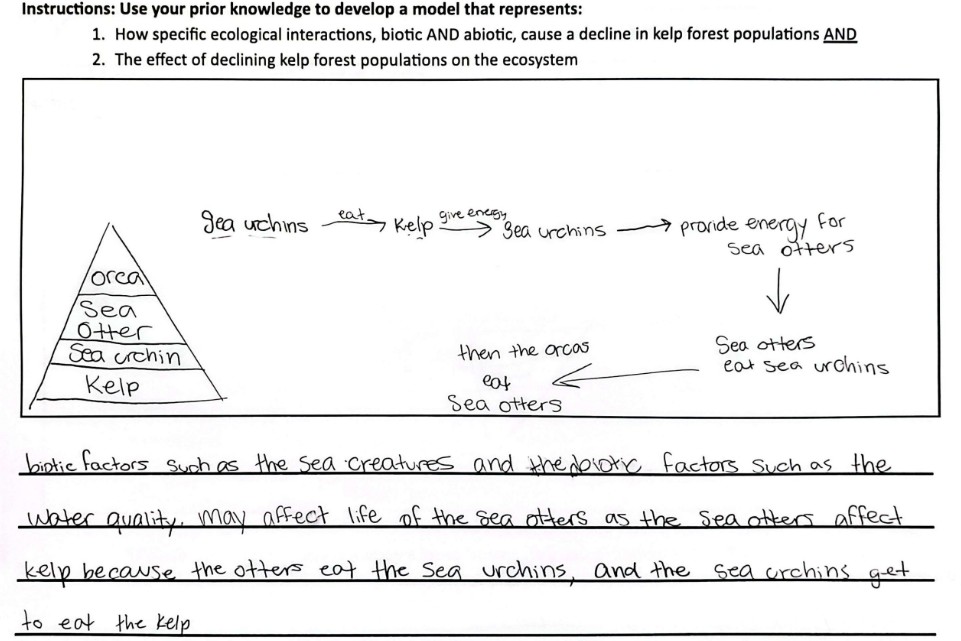
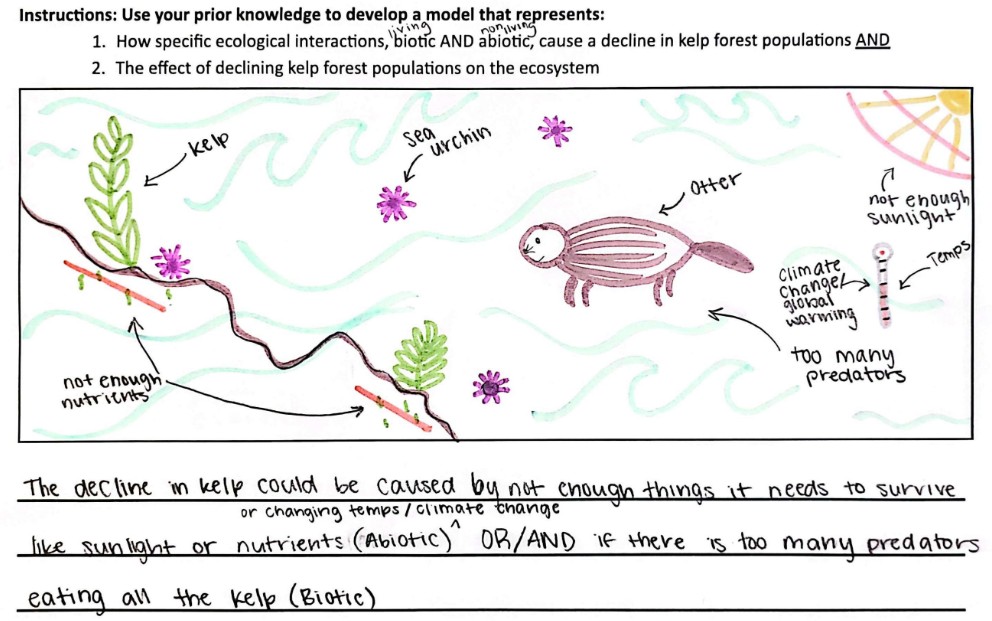
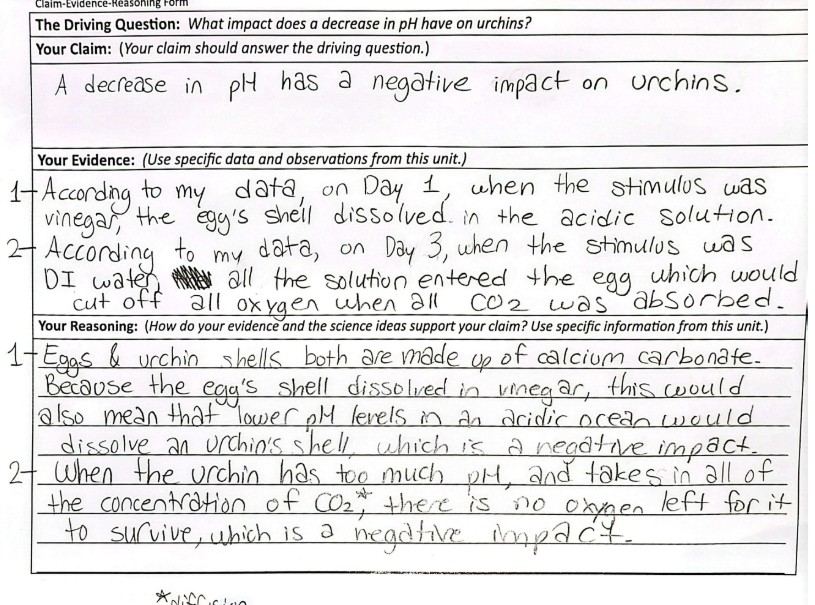
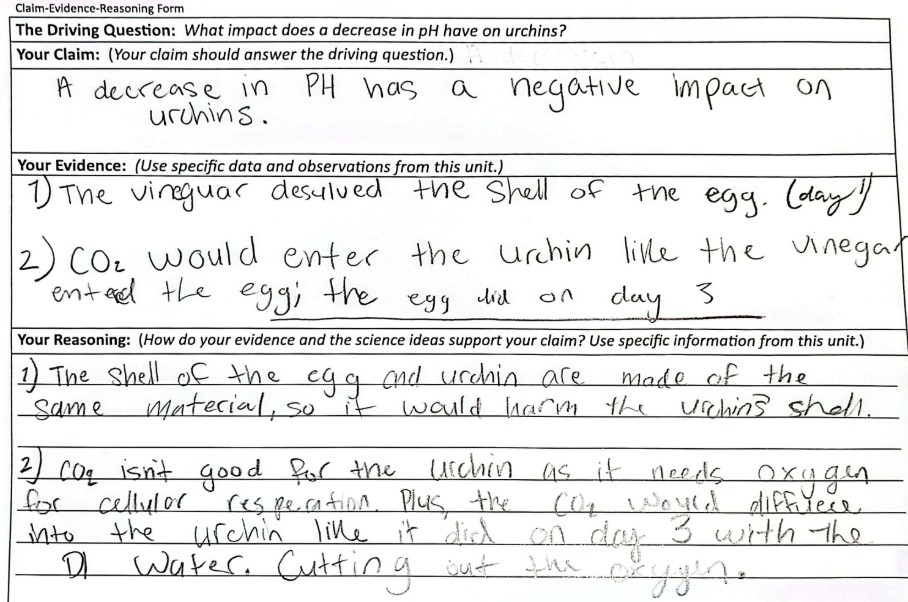
Above are examples of student responses to our unit driving question, teaching to the same standard. Students were instructed to make a Claim answering the driving question, provide supporting Evidence from specific data gathered during our Osmosis Lab and be able to give Reasoning explaining how the evidence supports your claim.
During my Student Teaching Semester (Jan-Apr 2024), formative assessment played a key role in shaping my instructional approach. Designing and implementing formative assessments allowed me to monitor student learning and identify areas where support was needed on a daily basis.
Effective use of formative assessment involves several essential components:
- Clearly defining a learning objective
- Ensuring students are actively engaged in completing the task
- Collecting meaningful data from the assessment
- Using that data to inform and adapt future instruction
Designing a Data-Rich Assessment: When teaching cell division as the classroom lead, I had the chance to practice utilizing formative assessment every day to inform the next day’s lesson. Learning about the two different types of cell division can be confusing, so I spent time comparing and contrasting mitosis and meiosis, teaching to the standard below.
NGSS Standard:
- HS-LS3-2. Teaching to this standard, students will be able to make and defend a claim based on evidence that inheritable genetic variations may result from (1) new genetic combinations through meiosis, (2) viable errors occurring during replication, and/or (3) mutations caused by environmental factors.
Giving the Assessment: Students completed an informal assessment (below), which provided insight into their understanding so far (Graph 1).
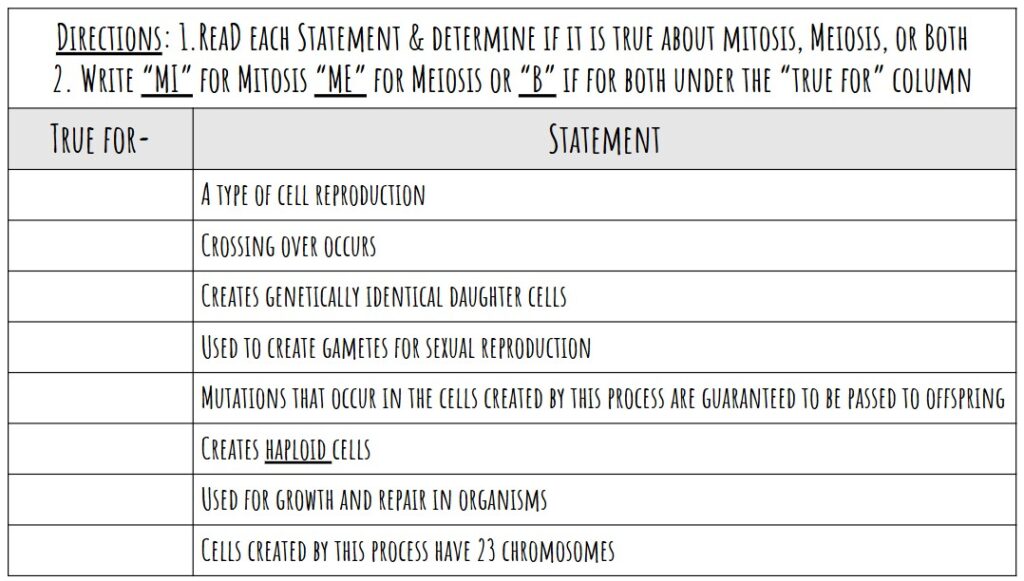
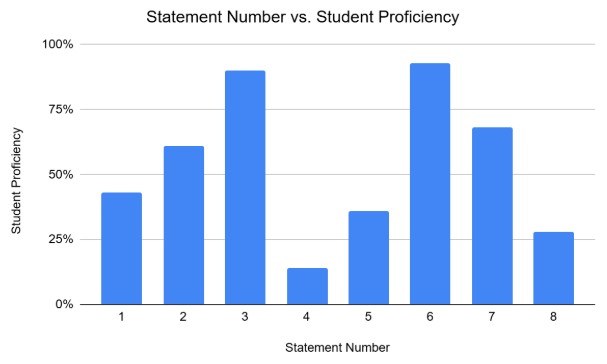
Analysis of Student Understanding: To clarify the differences between mitosis and meiosis, I used formative assessment at multiple points to guide instruction and check for understanding. I began by informally assessing students’ prior knowledge of cellular differentiation through a class discussion, which revealed a solid baseline for introducing body cell versus sex cell division. During a vocabulary-focused lesson on sexual reproduction, I provided a structured handout for students to define terms and draw visuals. As I modeled each concept using slides and examples, I circulated the room to gather real-time data on engagement and comprehension.
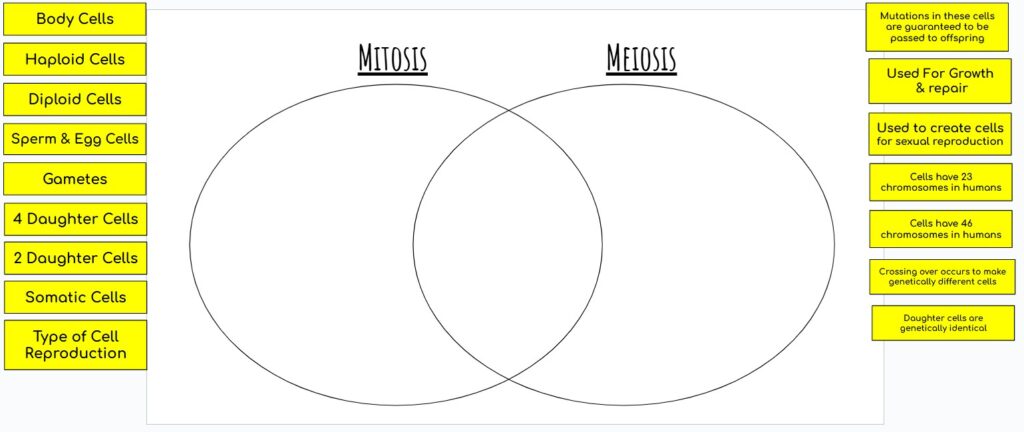
Using Assessment Data to Inform My Teaching: After the lesson, I asked students to re-draw the stages of meiosis using colored pencils, which served as a visual formative check of their understanding. To further assess learning, I designed a group Venn diagram activity (below) comparing mitosis and meiosis using statements from a prior task. As I observed students’ collaboration and asked probing questions, I identified common misconceptions. In response, I facilitated a whole-class discussion to address these gaps and encourage peer explanation. Finally, students completed a detailed side-by-side comparison activity in groups, which we reviewed as a class—providing me with another opportunity to assess learning and adjust instruction accordingly.
Below are additional examples of resources used to support student learning.
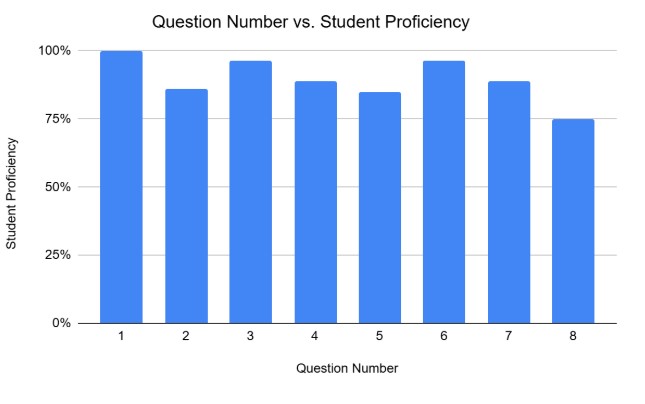
Following instruction, I administered a formative assessment to evaluate students’ understanding of mitosis versus meiosis. The questions mirrored those from our earlier activities and helped confirm that targeted discussions and clarification had been effective.
Results showed clear growth, reflected below (Graph 2): 82% correctly identified meiosis as the process for gamete formation (up from 14%), 85% recognized that only mutations in sex cells are heritable (up from 64%), and 75% understood that haploid cells contain 23 chromosomes (up from 28%). These improvements reflect deeper understanding and the impact of formative feedback.
Example of Student A’s work before re-teaching (below).

Example of Student A’s work on post-teaching formative assessment (below).

The same student from the pre-teaching assessment above now demonstrates their ability to correctly answer every question about each process. Previously, their worksheet was all marked up from editing answers while learning during instruction.
Example of notes provided to students while teaching after pre-assessment.
